
Wall types and materials
Concrete Block Retaining Walls: Types, Costs and What to Know
Segmental block vs CMU walls, published installed costs, reinforcement and drainage, and what to ask an installer.
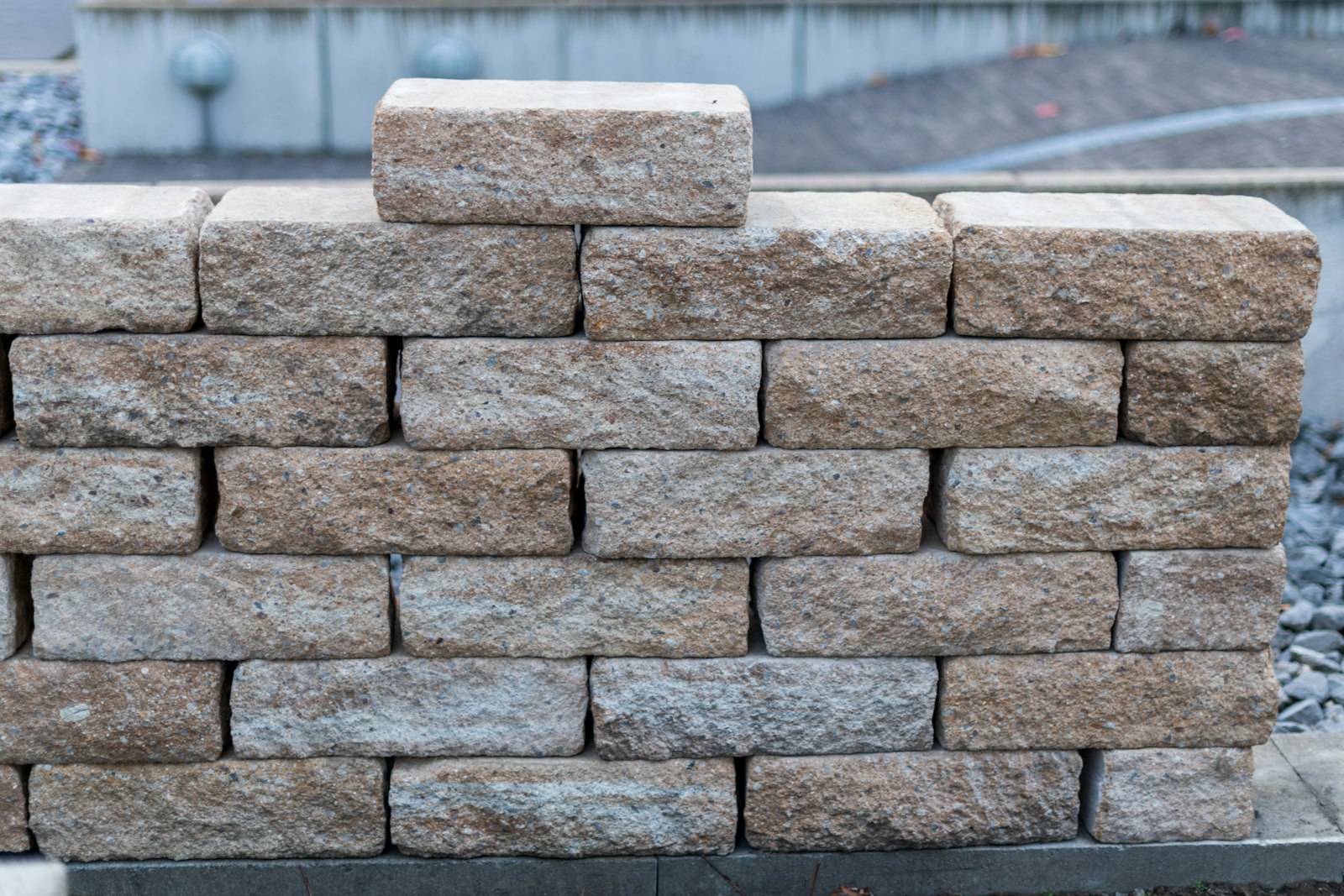
A concrete block retaining wall holds back soil using a system of concrete units and a designed foundation, sometimes with reinforcement extending into the retained ground. But “concrete block retaining wall” can describe different structures. The blocks you buy for a decorative garden edge are not automatically suitable for an engineered slope or driveway wall.
For most homeowners, the critical distinction is between interlocking segmental retaining wall units and traditional concrete masonry units (CMUs). Both use concrete, but their design and construction methods differ.
This guide explains the systems, their typical cost references, drainage and reinforcement, how to choose materials and what to ask an installer.
Types of Concrete Block Retaining Walls
| System | What It Looks Like | How It's Built |
|---|---|---|
| Segmental retaining wall (SRW) | Textured/interlocking modular blocks, often set back each course | Mortarless units on a designed base; sometimes reinforced soil/geogrid |
| Concrete masonry unit (CMU) retaining wall | Hollow or solid masonry blocks, often mortared or finished | May use reinforced/grouted cores and designed concrete footing |
| Decorative landscape wall | Small retaining-look edging blocks | Product-specific; may not be suitable for meaningful soil loads |
Segmental Block Retaining Walls
Segmental units are specially manufactured for retaining wall systems. Their stability can derive from unit mass and geometry, with geosynthetic reinforced soil used in appropriate designs.
The Concrete Masonry & Hardscapes Association (CMHA) explains the mortarless units, interlock, design considerations and use of soil reinforcement. CMHA’s sample specification also refers to ASTM C1372 for segmental retaining-wall units.
Don’t assume all interlocking blocks can build the same wall height. Follow the selected system’s guidance and site-specific design.
CMU Block Retaining Walls
Concrete masonry retaining walls are built from conventional masonry blocks, often laid with mortar. Some systems rely on wall mass; reinforced cantilever masonry walls use steel, grout and designed footings.
CMHA has separate technical references for gravity CMU walls and reinforced cantilever masonry walls. These are different from dry-stacked segmental systems.
A contractor quote should state which system is actually proposed.
How Much Does a Concrete Block Retaining Wall Cost?
HomeGuide’s January 2026 US guide lists approximately $15–$40 per square foot installed for interlocking concrete block retaining walls, depending on the work and scope.
That is an installed-cost reference, not a block-store shelf price. Actual site costs can be higher where foundations, soil reinforcement, engineering, drainage, demolition or tight access change the scope.
For a first-pass comparison, a 30-foot-long, 3-foot-high wall has 90 square feet of exposed face. Applying the published range gives $1,350–$3,600 as arithmetic only. HomeGuide also reports contractor minimums around $1,500–$3,000, so very small projects do not necessarily scale down proportionally.
The correct local figure comes from a scoped quote. For a broader breakdown, see retaining wall cost or try the cost calculator.
What Does the Block Price Not Tell You?
The visible units are only one part of the system.
A complete installed quote may involve:
- Foundation investigation, excavation and base preparation.
- Wall units, corners and caps.
- Placement labour and equipment.
- Specified gravel backfill and compaction.
- Drainage collection, outlets and surface water management.
- Geogrid or other reinforcement where required.
- Design, permits and inspections when applicable.
- Cleanup, haulage, soil restoration and landscape repair.
Ask contractors to identify which parts are included versus separately charged. Comparing a material-only retail price with a finished wall quote creates a false saving.
Do Concrete Block Retaining Walls Need Geogrid?
Some do; others don’t. It depends on the selected wall system, height, loads, soil and design. Geogrid reinforces the soil mass; it is not a drainage filter.
A short gravity segmental wall may rely on block mass and geometry within the manufacturer’s design limits. More demanding conditions can call for reinforced soil or a different retaining system entirely.
The CMHA Design Guide identifies surcharge loads, poor foundations and special conditions as reasons for qualified engineering.
Do not decide reinforcement solely from the exposed wall height, and don’t substitute generic garden fabric for a specified geogrid product.
What Drainage Does a Block Retaining Wall Need?
A suitable water-management system deals with:
- Surface runoff from above and around the wall.
- Incidental water reaching the material behind the facing.
- Groundwater where present.
For segmental systems, design details can include clean stone behind the units, drainage collection pipe and a safe outlet. But the standard wall-rock drain isn’t meant to manage unlimited groundwater or concentrated roof/driveway runoff.
See retaining wall drainage for the full explanation and questions about discharge locations.
Is Concrete Block Better Than Poured Concrete?
The answer depends on design and site conditions, not an absolute strength ranking.
Segmental block can provide a modular stone-like finish and flexible layouts. Poured reinforced concrete provides a different structural and architectural approach. Some concrete block proposals refer to CMU masonry rather than segmental units.
Compare the same retained height, soil assumptions, loads, outlet design and full scope.
Read our block vs poured concrete comparison and poured concrete wall guide.
How Long Does a Concrete Block Retaining Wall Last?
Service life depends on design, construction, exposure, freeze–thaw conditions where applicable, water management and maintenance.
A wall can have durable concrete units and still perform poorly if the foundation, retained soil or drainage design is unsuitable. Don’t accept “it lasts forever” as a warranty.
Ask the installer about the chosen manufacturer’s product specifications and the contractor’s written warranty.
Can You Build a Concrete Block Retaining Wall Yourself?
A competent homeowner may consider a small, low-consequence landscape project using a manufacturer’s approved system where local rules allow. That doesn’t make all short walls safe for DIY.
Structural work, nearby slopes, driveways, buildings, unclear groundwater or unstable ground can require professional design regardless of visible height.
Choosing Blocks and an Installer
Ask these questions before buying units or signing a quote:
- Is this an SRW product, a CMU masonry wall, or a decorative landscape block?
- What site loads and soil conditions is the design based on?
- Which exact block product, size, cap and finish are specified?
- Does the proposed system require geogrid or structural reinforcement?
- Where does collected drainage water leave the site?
- Who handles permits, engineering and inspections?
- Can the installer show completed walls built with this system?
- What happens if excavation reveals different soil or groundwater?
A generic landscaper who offers only decorative wall edging may not be the right business for a moving or engineered wall.
Concrete Block Retaining Wall FAQs
Is concrete block the same as cinder block?
Not precisely. People often use “cinder block” informally for hollow CMUs. Retaining-wall segmental units are usually a distinct product family. Verify the product and intended use.
Do retaining wall blocks need mortar?
Segmental retaining wall systems generally use dry-stacked units. Traditional CMU masonry retaining walls may use mortar, grout and reinforcement. They are different systems.
Are concrete blocks cheaper than poured concrete?
Published installed price ranges often overlap. Site work and design requirements can change which proposal is less expensive.
Do block retaining walls require permits?
Requirements depend on the municipality, wall height, loads and location. Check retaining wall permits and engineering.
Can a leaning block wall be repaired?
Possibly, after assessment. Moving units may indicate problems with the retained soil, base or reinforcement. See retaining wall repair.
Plan a Wall That’s Appropriate for Your Property
The key decision isn’t which concrete block looks best in the shop. It’s which complete retaining system safely fits the site.
Find contractors who advertise block installation, then compare their system-specific proposals. Compare retaining wall types if you aren’t yet committed to concrete.
RetainingWallGuide is an information resource and contractor directory, not a wall designer or installer.
Sources and Method
- CMHA — Guide to Segmental Retaining Walls
- CMHA — Sample SRW Specifications
- CMHA — Concrete Masonry Gravity Retaining Walls
- CMHA — Concrete Masonry Cantilever Retaining Walls
- HomeGuide — Retaining Wall Costs (2026)
Prices and sources checked October 14, 2026.
Review status: the technical sections of this guide have not yet been reviewed by a qualified professional. We’ll name the reviewer and their qualifications here once that review is complete. See our editorial policy.