
Repair and drainage guide
Retaining Wall Repair: Signs, Options & When to Replace
Warning signs, causes, repair options and how to decide between repair and replacement, with a safety-first approach to walls that may be unstable.
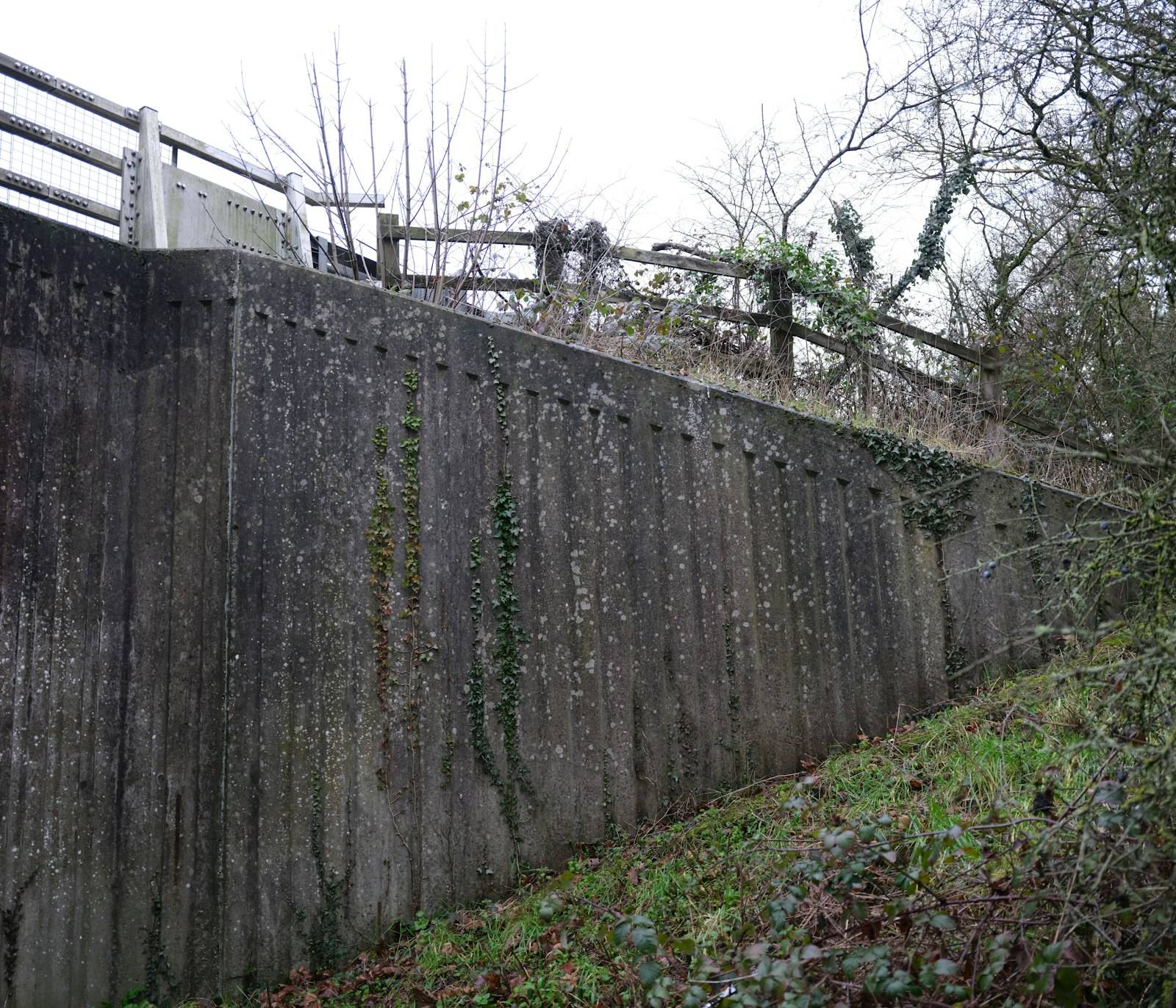
A retaining wall can sometimes be repaired without rebuilding it, but the right fix depends on why it is damaged. Loose caps, isolated surface deterioration and some localised drainage problems may be repairable. Leaning, bulging, widening cracks, separated blocks or ground settling behind the wall can indicate a more serious problem that needs an on-site assessment.
The most useful question is not “How do I cover this crack?” It is “What caused the damage, and can the existing wall still safely hold back the soil?”
A lasting retaining wall repair addresses that cause, whether it involves drainage, the foundation, the retained soil, reinforcement or deteriorated wall materials. A cosmetic patch does not restore a wall that has lost structural stability.
If the wall is visibly unstable
Keep people, pets and vehicles away from the wall and the ground immediately above and below it. Don’t try to push it upright, dismantle it or dig behind it. Contact a qualified retaining wall professional or structural/geotechnical engineer promptly. If collapse poses an immediate danger, follow local emergency guidance.
Need someone to assess the wall? Find retaining wall contractors and check that a business actually advertises repair work, not just new installations. RetainingWallGuide distinguishes website-advertised services from contractor-reported capabilities (how we review contractors); listings are not a certification of workmanship.
Does Your Retaining Wall Need Repair or Replacement?
Use these signs to decide what kind of assessment to request, not to diagnose the wall from appearance alone.
| What you notice | What it might indicate | Sensible next step |
|---|---|---|
| A loose cap, isolated mortar loss or surface flaking, with no apparent wall movement | Localised deterioration or weathering | Have the affected area checked before arranging a limited repair. |
| Water staining, seepage, blocked drainage outlets or persistently wet soil | Water may not be moving through or away from the retained soil as intended | Ask for an assessment of surface runoff, backfill and drainage outlets. |
| A wall leaning outward, bulging or separating at joints | Movement of the wall or retained soil; possible loss of stability | Keep clear of the affected area and arrange a prompt professional assessment. |
| Cracks that are widening, stepped cracks or displaced blocks | Movement, material damage or foundation problems | Have the wall and the soil above and below it evaluated. |
| Soil washing through joints, depressions behind the wall or erosion near its base | Backfill loss, undermining or water-related movement | Avoid disturbing the area and get the cause assessed. |
| A section has collapsed or appears close to collapse | Potentially unsafe retaining conditions | Restrict access. Seek urgent qualified help before any removal or excavation. |
These indicators align with the New York City Department of Buildings’ retaining-wall safety guidance and the Texas Department of Transportation’s maintenance guidance.
No universal threshold
There is no universal safe amount of lean or crack width. The original wall design, its height, the soil, the loads above it and whether the movement is continuing all matter.
Signs a Retaining Wall Is Failing
Leaning or Rotating
An outward lean deserves investigation, especially when it is new or increasing. Retaining walls may be built with an intentional backward setback, so the important question is whether the wall has moved from its intended position.
Possible contributors include soil pressure, water, inadequate reinforcement, a shifting base or loading that the wall was not designed to retain. You cannot identify which one applies by measuring the lean from a photograph.
Our guide to leaning retaining walls covers what movement can indicate and what kind of assessment to request.
Bulging or Bowing
A bulge is a section of the wall face projecting farther outward than adjacent sections. It may indicate pressure behind the wall, deformation of wall materials or localised instability.
Don’t assume a bulging wall only needs a drain installed. Drainage may be part of the remedy, but it will not automatically restore a wall that has already deformed.
Cracks, Gaps and Separating Blocks
Not every surface crack means imminent failure. Mortar and concrete can deteriorate, and some damage affects individual units rather than the structure as a whole.
More concerning patterns include growing cracks, displaced masonry, stepped cracking, or joints opening while the wall changes alignment. The pattern needs to be assessed alongside movement, soil and drainage conditions.
Water Seeping Through the Wall
Water on the wall face can be a clue, not a diagnosis. Some retaining-wall systems are intentionally designed to drain. Others rely on particular backfill, pipe, outlets or water-control details.
Watch for repeated ponding, soil washing out, blocked outlets or runoff directed behind the wall. These are reasons to review the whole water-management system, not merely seal the face.
Read our retaining wall drainage guide for the questions that matter.
Settling Ground, Erosion or Timber Decay
Depressions or cracks in the ground above the wall, erosion at its base, and deteriorating timber can all affect the support system.
Do not walk onto visibly undermined ground to inspect it. Photograph possible changes from a safe position and let a professional investigate.
Why Do Retaining Walls Fail?
Retaining walls resist pressure from soil and, depending on the design, water and other loads. A visible problem may result from several interacting causes.
Water and Drainage Problems
Poor surface grading, blocked or damaged outlets, inappropriate backfill and unmanaged groundwater can allow water pressure to build or soil to weaken. Water movement can also wash fine material out from behind the wall.
Manufacturer guidance from Allan Block stresses managing where water comes from and where it can safely go. TxDOT likewise identifies water infiltration and backfill loss as important maintenance concerns.
Water is a common contributor, but not every failing wall has a drainage-only problem.
Inadequate Base or Soil Support
A wall’s performance depends on what it sits on as well as what is visible. Poorly prepared or unsuitable foundation soil, settlement, erosion or changes in ground conditions can allow the wall to move.
Repairing the wall face alone won’t correct a failed foundation or unstable ground.
Insufficient Reinforcement or Unsuitable Original Design
Some wall systems rely on reinforced soil, structural concrete, anchors or other engineered components. A wall built without the support needed for its actual height and retained loads may develop problems even when individual blocks are in good condition.
New Loads Above the Wall
A driveway, parking area, structure, fence, stockpiled soil or altered slope may introduce loads that weren’t considered when the wall was built.
A contractor should ask what sits behind and above the wall, not just measure the visible face.
Deterioration, Weather and Construction Defects
Freeze–thaw exposure, weathered mortar, rotting timber, damaged units, inadequate compaction and poor installation practices can contribute to deterioration or movement.
A useful inspection distinguishes damage to the visible materials from damage to the system holding back the soil.
What Are the Main Retaining Wall Repair Options?
Retaining wall repair is not one standard procedure. The proposed method should follow a diagnosis of the wall and the cause of distress.
| Repair option | When it may be considered | What the proposal needs to explain |
|---|---|---|
| Replace caps or repair localised mortar/surface damage | Isolated defects on a wall assessed as stable | Why the defect is localised and how the repair materials suit the wall. |
| Restore surface drainage or address an obstructed outlet | A water-management issue identified before or alongside structural movement | Where water originates and where it will be discharged safely. |
| Rebuild an affected section of block or masonry | A limited section has deteriorated or moved, while the remaining wall can safely stay | How the base, retained soil, reinforcement and drainage will be dealt with. |
| Engineered stabilisation, anchors or reinforcement | A qualified designer determines that strengthening the existing wall is feasible | Design responsibility, loads, installation method, inspections and limits. |
| Full removal and replacement | Widespread movement, failed support, unsuitable design or deterioration that cannot be economically repaired | Temporary stability, demolition, new design, water management and restoration. |
Can Cracked Blocks or Mortar Be Repaired?
Sometimes. If a professional establishes that the damage is superficial and the wall remains stable, replacing damaged units, restoring mortar or repairing the finish may be reasonable.
If the cracks result from soil movement, water pressure or inadequate support, patching them can disguise the warning sign without correcting the problem.
Ask the contractor to identify the cause before accepting a quote for crack filling.
Can Drainage Be Repaired Without Rebuilding the Wall?
Sometimes, if the existing wall is stable and the site allows safe access. Possible work includes addressing runoff, repairing a known outlet or reconstructing a drainage arrangement after an appropriate assessment.
If the wall has already shifted or the drainage problem is inaccessible without removing retained soil, the work may require partial reconstruction or an engineered approach.
Don’t try this as a DIY fix
Do not excavate behind a leaning wall or drill new weep holes yourself. Excavation can change the forces stabilising a wall, and drilling can damage the structure or conflict with its intended drainage design.
Can a Leaning Retaining Wall Be Straightened?
There is no reliable homeowner-level rule for this. Some walls can be stabilised after a professional assessment; others need to be dismantled and rebuilt.
An engineer or appropriately qualified specialist needs to consider whether the wall, foundation and retained soil are still capable of working as a safe system. Simply pushing blocks back into position does not solve an underlying stability problem.
Can Just One Section Be Rebuilt?
A partial rebuild can make sense where damage is genuinely localised and the adjoining wall can remain stable during and after the work.
The contractor still needs a plan for excavation, any reinforcement crossing the repair area, drainage continuity and support of the retained soil. Partial reconstruction isn’t automatically the low-risk option.
Check that a contractor’s profile shows repair as a service. We mark repair separately from building new walls.
Repairing Different Types of Retaining Walls
The correct method depends partly on how the wall was built.
Segmental Concrete Block Walls
Segmental retaining walls use interlocking or stacked units; some systems also rely on reinforced soil behind the wall. Loose caps and individual deteriorated units may be straightforward to address on an otherwise sound wall.
A wall that has moved or lost reinforced-soil support is a different job. Re-stacking visible courses may not correct a compromised base or buried reinforcement.
Poured Concrete Retaining Walls
For a poured-concrete wall, cracks, spalling and exposed reinforcement need to be evaluated in context. A surface treatment may be appropriate for a limited material defect but won’t restore capacity lost through structural movement or foundation problems.
Significant cracking or displacement warrants qualified evaluation before a repair method is selected.
Brick and Natural Stone Walls
Brick and stone work can involve failed mortar, displaced pieces, erosion or instability in the supporting structure.
Ask whether the wall is built as load-bearing masonry, a gravity wall or a decorative facing over another structure. Those configurations require different repairs.
Timber and Railroad-Tie Walls
Timber walls may deteriorate at or below ground level, including in locations a homeowner cannot see. Replacing a visible board or tie won’t necessarily restore decayed buried members or failed connections.
Extensive deterioration or movement may make rebuilding with an appropriate system the more practical option.
Gabion Walls
Gabion baskets can develop corrosion, damaged mesh, displaced rock fill, settlement or ground-support problems. A repair needs to consider the basket system and the condition of the retained soil and foundation, not just replace loose stones.
Should You Repair or Replace the Retaining Wall?
Repair is most attractive when the defect is limited, the existing structure remains suitable and the cause can be corrected. Replacement becomes more likely when movement is widespread, the base has failed, materials have deteriorated extensively or the wall was never designed for its current loads.
Don’t make that decision from the age of the wall or the repair price alone.
| Question | Favors a targeted repair when… | Makes replacement worth evaluating when… |
|---|---|---|
| How much is affected? | The problem is confined to a small, clearly identified area. | Several sections are shifting or failing. |
| Is the structure still sound? | Assessment confirms the remaining wall can safely stay. | The foundation, wall body or reinforcement is compromised. |
| Can the cause be corrected? | Drainage or local defects can be remedied without destabilising the wall. | Fixing the underlying issue requires extensive dismantling. |
| Is the wall suitable for the job? | Existing design and materials remain appropriate for the site. | Loads, slope or ground conditions exceed what the wall was built to resist. |
| What is the full price? | The repair offers useful service life at a sensible total cost. | Extensive repair approaches rebuild cost without equivalent durability. |
A cheap repair is not good value if the same damage returns because the original problem wasn’t addressed.
Ask for two scope-based proposals when both options are feasible: one that repairs the wall and corrects the cause, and one that removes and replaces it. The comparison should include drainage, excavation, engineering, permits, disposal, site restoration and warranty terms.
If you’re pricing a new wall as an alternative, start with our retaining wall cost guide.
For the cost of removing and rebuilding an existing wall, see retaining wall replacement cost.
How Much Does Retaining Wall Repair Cost?
Contained retaining wall repairs often cost hundreds of dollars, but structural repair or replacement can cost thousands. The wall’s condition and the proposed scope matter far more than a single national average.
For context, Angi’s July 2026 repair guide reports $450–$950 for a typical retaining wall repair, with an average near $700. HomeGuide’s repair guide gives a broader $100–$1,500 range for common repairs and $6,000–$14,000 for a typical removal-and-replacement project.
Not a quote for an unstable wall
Those low repair figures are not realistic quotes for every leaning or bulging wall. They reflect a mix of relatively contained jobs. Excavation, structural reinforcement, engineering, large wall dimensions and difficult access can change the cost substantially.
A contractor who quotes crack filling and a contractor who quotes reconstruction may not be pricing the same problem.
Detailed figures by type of repair are in our retaining wall repair cost guide.
For rebuilding estimates, see our retaining wall cost guide and cost calculator. Compare those figures with the full scope of any proposed repair, including work behind the wall.
Who Should You Call: Retaining Wall Contractor or Structural Engineer?
A retaining wall contractor with documented repair experience is a sensible first contact for straightforward, localised work on a wall that does not appear unstable. Not every landscaper or wall installer performs structural repairs.
Seek a qualified structural or geotechnical engineer when there is significant or continuing movement, uncertain stability, nearby structures or driveways, slope concerns, ground settlement or other substantial loads. Depending on the work and locality, professional design and permits may be required.
If the wall appears unsafe, keep clear rather than waiting for a standard contractor quote appointment.
Local rules differ. For example, Philadelphia requires a permit for many retaining wall replacements, while Portland’s permitting guidance distinguishes height and surcharge conditions. Neither city’s rules should be treated as a nationwide threshold.
How to Find a Contractor Who Actually Repairs Retaining Walls
When comparing businesses, ask:
- Do you repair existing retaining walls, or only build new ones?
- Have you repaired this wall type and similar damage?
- Who investigates the cause of movement, soil or drainage problems?
- Will an engineer be involved if structural work is required?
- Can you explain the proposed repair and what it does not fix?
- Who handles permits, inspections, temporary support and site restoration?
RetainingWallGuide’s directory records installation, repair, replacement and drainage capabilities separately where supporting evidence exists. A company advertising new walls is not automatically listed as offering repairs. See how we review contractors.
Find retaining wall contractors and check the repair capability on individual profiles. Quote-request forms are available only for contractors that have agreed to receive enquiries through the site; other listings provide the contractor’s own contact details.
What Should a Retaining Wall Assessment Include?
An assessment should do more than look at the cracked block or leaning face.
Depending on the problem, a qualified professional may examine:
- Wall geometry: Length, height, visible alignment, bulges, joints and signs of recent movement.
- Wall type and condition: Blocks, concrete, masonry, timber or gabion components; visible deterioration.
- Retained ground: Settlement, cracking, erosion or depressions above and below the wall.
- Water management: Surface grading, downspouts, irrigation, outlets, seepage and signs of lost backfill.
- Loads and surroundings: Buildings, driveways, fences, slopes and property boundaries.
- Original construction: Available drawings, past repairs, permits, geogrid or other reinforcement where documented.
- Repair feasibility: Whether the wall can be made safe and serviceable without full reconstruction.
The recommendation should identify the observed problem, any uncertainties requiring investigation, the proposed work, and whether professional design or permitting is needed.
A photograph-based quote may be useful as an initial screening conversation. It should not be presented as a structural diagnosis.
What Should You Do Before the Contractor Arrives?
The safest preparation is information gathering without disturbing the wall or the soil it retains.
- Take wide photographs from a safe distance, showing the whole wall and the slope or ground above it.
- Record close-up details only where they can be photographed safely.
- Note when you first noticed the problem and whether it changed after rain, freezing weather or construction nearby.
- Find any drawings, contractor invoices, permits or previous repair records.
- Write down what sits above the wall: a driveway, structure, fence, patio, planted slope or other load.
- Tell the contractor if there is water seepage, an irrigation leak or recurring ponding.
- Describe access restrictions, property lines and any nearby utilities.
Don’t remove blocks, loosen anchors, dig at the wall’s base or excavate retained soil to “see what’s behind it.” Excavation can change stability. Where digging is planned, the responsible party should follow the local 811 utility-location process before work starts.
Is Retaining Wall Repair a DIY Job?
Limited non-structural upkeep may be possible on a wall that is known to be stable, such as cleaning a visible accessible outlet or addressing an isolated decorative defect according to the relevant manufacturer’s instructions.
Not DIY troubleshooting
Leaning, bulging, progressive cracking, erosion, foundation movement and excavation behind the wall are not DIY troubleshooting projects. They require assessment before a method is chosen.
Don’t drill drainage holes into a retaining wall, add anchors or remove retained material on the assumption that one technique works on every system.
How to Help Prevent Retaining Wall Problems After Repair
Maintenance won’t correct an unsafe design, but it can help reveal problems before they become more expensive.
- Check after heavy rain: Look from a safe position for unusual water flow, soil washout or new movement.
- Keep visible drainage paths accessible: Don’t cover known outlets with mulch, planting or landscaping changes.
- Watch the ground above the wall: Note new cracks, low spots or ponding.
- Protect the wall from new loads: Ask a qualified professional before adding structures, parking or substantial fill near it.
- Keep records: Save repair details and dated photographs so future changes can be compared.
Allan Block’s retaining-wall maintenance guidance recommends regular seasonal inspections, particularly after wet periods, and contacting a qualified professional if significant movement appears.
Retaining Wall Repair FAQs
Can a Leaning Retaining Wall Be Repaired Without Rebuilding It?
Sometimes, but only after the cause and stability have been assessed. A specialist may recommend engineered stabilisation or a partial rebuild in some circumstances. A wall with widespread movement, compromised support or an unsuitable original design may need replacement.
Don’t use an arbitrary amount of lean as a homeowner-level pass/fail test.
Are Cracks in a Retaining Wall Dangerous?
Some cracks reflect localised material deterioration; others accompany structural movement or changing soil pressure. Widening cracks, displaced units, bulging, lean or changes in the ground near the wall deserve prompt professional assessment. Appearance alone cannot reliably establish safety.
What Is the Cheapest Way to Repair a Retaining Wall?
A limited repair to caps, mortar or another isolated defect is generally less expensive than excavation or reconstruction when the wall is otherwise sound. Filling a structural crack without correcting the cause is not a genuine low-cost fix.
How Much Does It Cost to Fix a Leaning Retaining Wall?
It depends on whether the wall can be stabilised, needs partial reconstruction or must be replaced. Generic national repair averages primarily describe contained repairs and shouldn’t be used as a quote for an unstable wall. Get an assessment of the cause and scope first.
Can You Fix Retaining Wall Drainage Without Replacing the Wall?
Sometimes. The answer depends on the wall’s condition, existing drainage arrangement, safe access and the type of work required. Improvements to runoff or a specific outlet may be possible; other problems require excavation or reconstruction. Read about retaining wall drainage.
Do You Need a Permit to Repair a Retaining Wall?
Minor maintenance and structural repair or replacement may be treated differently, and local requirements vary. Height, retained loads, nearby structures and property boundaries can all matter. Ask the local building authority and the contractor or engineer responsible for the work.
How Long Will a Retaining Wall Repair Last?
There is no reliable universal lifespan. The result depends on the wall system, material condition, repair design, workmanship and whether the original cause has been corrected. Ask the contractor what is included, what remains unchanged and what warranty applies.
Should I Call a Landscaper, Mason or Engineer?
Choose based on the work, not the broad trade label. Some landscapers and masons have genuine retaining-wall repair experience; others offer only new installations. Use a structural or geotechnical engineer when stability, significant movement, complex soil or loading conditions require professional evaluation.
Find Contractors Who Actually Offer Retaining Wall Repair
Don’t start by asking someone to cover a crack. Start by finding out why the wall is changing.
RetainingWallGuide helps you identify contractors by the retaining-wall services they advertise, including repair, installation, replacement and drainage remediation.
If the wall is being assessed for full replacement, compare the scope against our retaining wall cost guide. If water is involved, review retaining wall drainage before comparing proposals.
RetainingWallGuide is an independent homeowner information resource and contractor directory, not an engineering or construction company. This guide is general information, not a diagnosis or confirmation that a wall is safe. Contractor capabilities are classified from documented sources; a listing is not a certification of qualifications, licensing or repair outcomes. Quote requests are routed only to participating contractors when appropriate coverage is available.
Sources and Editorial Methodology
Research checked: October 14, 2026. This guide draws on public safety guidance, engineering and manufacturer material, and separately identified cost estimates. It does not claim that a specific wall can be assessed remotely.
- New York City Department of Buildings — Retaining Walls: Warning signs including lean, bulges, cracking, ground movement and water issues.
- Texas Department of Transportation — Retaining Walls: Maintenance guidance on backfill, drainage, movement and the risks of excavation near existing walls.
- Allan Block — Water Management: Manufacturer guidance on surface runoff, soil moisture and drainage design.
- Allan Block — Caring for Your Retaining Wall: Seasonal inspection and signs warranting professional attention.
- Angi — Retaining Wall Repair Cost (updated July 9, 2026): General repair cost reference; not a structural-repair price guarantee.
- HomeGuide — Retaining Wall Repair Cost: Repair and removal/replacement ranges, with scope limitations.
- City of Philadelphia — Retaining Wall Permit and City of Portland — Retaining Wall: Examples demonstrating that permit requirements are local.
- Call 811: US utility-location information before excavation.
Review status: the structural safety, repair-method and engineering sections of this guide have not yet been reviewed by a qualified structural or geotechnical professional. We’ll name the reviewer and their qualifications here once that review is complete. See our editorial policy.