
Wall types and materials
Types of Retaining Walls: How to Choose the Right System
How each type of wall holds back soil, what it is made from, and how to shortlist the right system for your property.
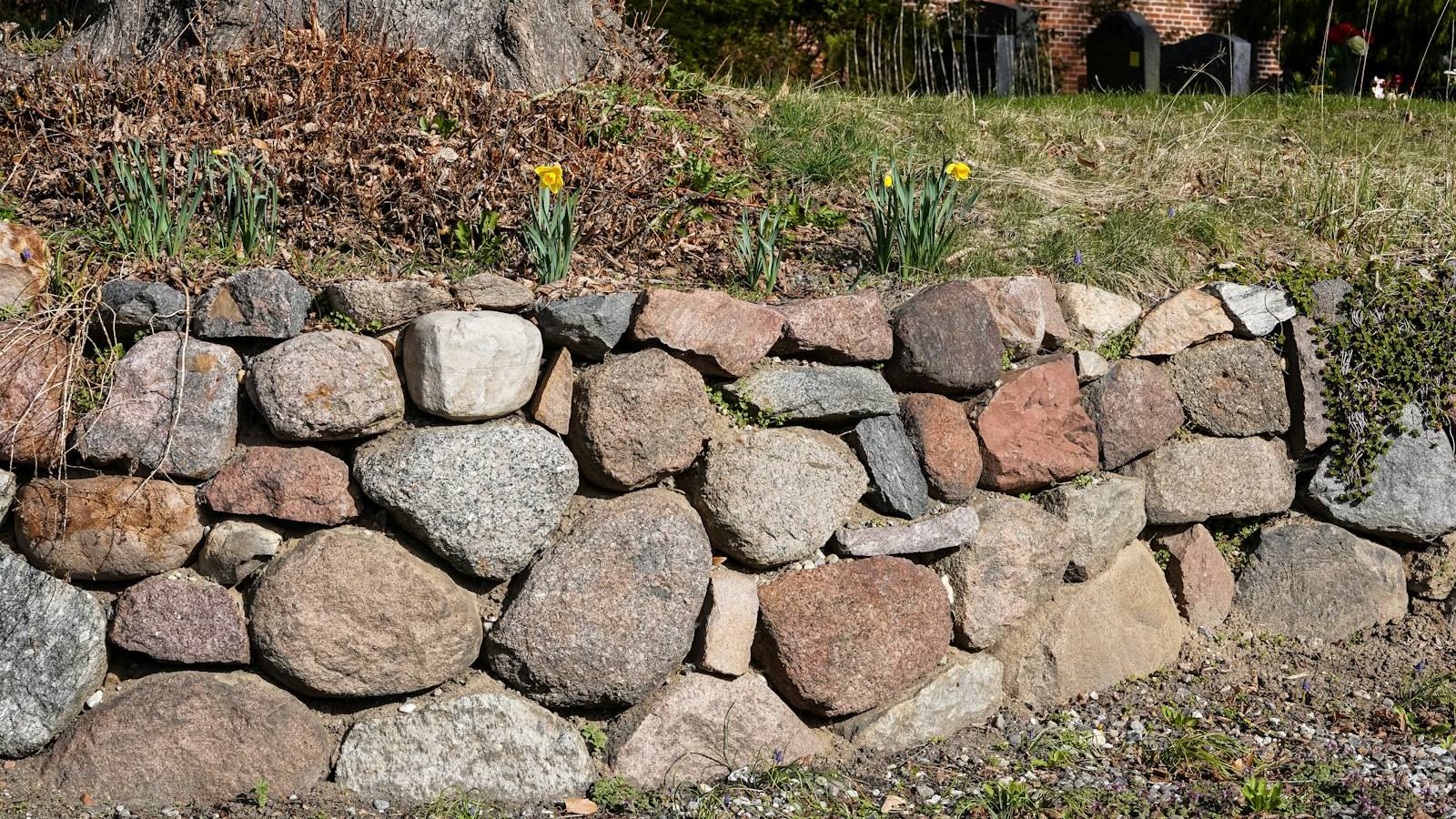
The main retaining wall types include gravity walls, segmental block walls, reinforced concrete walls, mortared masonry walls, stone walls, timber walls and gabion walls. But these labels describe two different things: how the wall resists soil pressure and what it’s made from.
That distinction matters. Concrete blocks can form a mortarless segmental wall or a reinforced masonry wall. A stone-faced wall may use a hidden reinforced structure. The attractive surface isn’t always the part doing the retaining.
For homeowners, the best choice depends on the retained height, soil, groundwater, access, loads above the wall, appearance, service life and whole-project cost. There is no single strongest or cheapest system for every property.
Use this guide to shortlist options, then review retaining wall costs and discuss a site-specific design with the appropriate contractor or engineer.
Retaining Wall Types Compared
| Type | What Resists the Soil | Typical Use and Trade-Off |
|---|---|---|
| Gravity wall | Mass of stone, concrete or other heavy material | Simple concept; needs sufficient width and suitable foundation |
| Segmental retaining wall (SRW) | Interlocking concrete units, sometimes combined with reinforced soil | Modular appearance, curves and many residential landscapes |
| Poured reinforced concrete | Concrete stem and designed reinforcing/footing | Custom engineered geometry; formwork and access matter |
| Reinforced concrete masonry (CMU) | Mortared/grouted block with reinforcement and footing | Can be finished with masonry or veneer; construction differs from segmental units |
| Natural stone | Stone mass or stone facing over another designed structure | Distinctive appearance; stone method must be specified |
| Timber | Timber members and connections designed for retained loads | Landscape appearance; buried material condition and ground contact matter |
| Gabion | Rock-filled wire baskets forming a designed gravity structure | Textured finish and modular units; basket corrosion and footprint matter |
Additional engineered systems such as sheet piles, anchored walls and mechanically stabilised earth structures may be appropriate for specialist sites, slopes or substantial loads. They aren’t interchangeable DIY alternatives to garden-wall blocks.
Structural Types vs. Materials
A gravity wall relies on its own weight and geometry to resist overturning and sliding. It may be made of stone, mass concrete, segmental units or gabion baskets.
A cantilever retaining wall uses a reinforced stem and footing acting together to resist soil pressure. The structure is often concrete or reinforced masonry.
A reinforced-soil wall combines a facing with reinforcing elements extending into the soil mass. Segmental concrete units are one possible facing.
The Concrete Masonry & Hardscapes Association’s segmental wall guide distinguishes gravity segmental walls from reinforced-soil segmental walls. See also CMHA’s masonry gravity guidance and cantilever masonry guidance.
Concrete Block and Segmental Retaining Walls
Segmental retaining walls use specially made concrete units stacked without mortar, relying on their geometry, friction and sometimes connectors. Some designs use geogrid or another geosynthetic to create a reinforced-soil system.
These systems are popular for curved layouts and finished landscape walls. They are not all the same product, and the design isn’t determined by block appearance alone.
If a quote simply says “concrete blocks”, ask whether the contractor means segmental retaining wall units or conventional concrete masonry units (CMU) laid with mortar and reinforcement.
Read the complete concrete block retaining wall guide.
Poured Concrete Retaining Walls
Poured concrete walls are cast in place in formwork and, where designed as reinforced structures, rely on specified reinforcement and foundations.
They can provide a smooth or textured finish, straight or custom geometry, and an engineered option for demanding loads. But forming, reinforcement, concrete delivery, finishing and curing affect cost and access.
A cast-in-place wall is not automatically better suited to every tall wall than a properly engineered segmental system. Compare the proposed design for the same site conditions, not materials in the abstract.
See poured concrete retaining walls and the block versus poured concrete comparison.
Natural Stone Retaining Walls
Natural stone can be built in different ways.
A dry-stacked stone gravity wall uses carefully placed stone and geometry. A mortared masonry wall uses bonded units. A stone veneer may simply provide the finish over a separate structure.
These are not equivalent products with equivalent prices or engineering requirements. Large stone pieces, skilled labour, access and local stone supply can make a major difference.
See natural stone retaining walls.
Timber Retaining Walls
Landscape timbers can suit some lower-scale projects, but wood in contact with soil and moisture requires careful material selection and long-term maintenance planning.
A timber retaining wall’s real performance depends on the system, connections, foundation, drainage and suitable preservative treatment. It is not automatically a low-cost long-life substitute for concrete.
Gabion Retaining Walls
Gabions are stone-filled wire baskets used as gravity-retaining structures in appropriate designs. Their appearance is deliberately industrial and textured; stone type and basket selection can change the look considerably.
The baskets need sufficient design width, foundation, suitable rock and corrosion protection for the environment. Open-looking rock fill doesn’t remove the need to manage runoff, groundwater and soil loss.
Which Retaining Wall Type Is Best for Your Property?
Answer these questions before choosing a material:
How Much Soil Does It Hold Back?
Approximate height and slope are an initial screen. The buried footing, soil profile and loads above the wall also matter.
What’s Above It?
A planting bed differs from a driveway, parking area, structure or steep rising slope. Additional loads can trigger engineering even where the wall doesn’t look particularly tall.
Where Is the Water Coming From?
Rainfall, downspouts, irrigation and groundwater affect the wall and the land around it. A construction system must include suitable surface and subsurface water management. See retaining wall drainage.
Can Equipment Access the Site?
A narrow side yard, fencing, trees, rock and steep terrain can make concrete delivery, excavation or placement of large stone difficult.
What Do You Want It to Look Like?
A stone garden wall, crisp poured-concrete finish and textured modular block may all appeal to different property owners. Appearance is important once the structural choice is appropriate.
What Is the Total Installed Scope?
Compare excavation, footing/base, reinforcement, drainage, engineering, demolition and restoration, not just block or stone price.
Use the cost calculator for budgeting, then obtain local quotes for a defined scope.
Is One Retaining Wall Type Stronger?
It is misleading to rank materials as universally “strongest”. A properly designed and constructed system must safely resist the actual earth pressure, water and loads it experiences.
The relevant comparison is between engineered proposals for the same site conditions. A segmental wall with reinforced soil and a cast-in-place reinforced concrete wall can both be legitimate solutions; the right choice depends on the project.
Can You Mix Wall Types?
You may see stone facing over concrete, segmental block above a designed foundation or terraces using different materials. Those combinations need to be assessed as a system.
Do not assume that placing two short walls close together avoids the structural requirements of a taller retained slope. Tiered walls can interact.
Types of Retaining Walls FAQs
What’s the most common retaining wall for residential landscaping?
Modular concrete retaining-wall units are widely used in residential landscapes, but site conditions and regional availability matter. The common choice isn’t automatically the right one.
Is a retaining wall the same as a garden wall?
Not always. A garden wall might be decorative or lightly retain soil. A true retaining wall is designed to resist pressure from retained earth and any relevant additional loads. Appearance alone can’t determine its structural job.
What’s the cheapest type of retaining wall?
Headline material ranges for timber and certain modular systems can be lower than premium stone. Whole installed cost depends on required foundation, reinforcement, drainage and access. See retaining wall cost.
Do gabion walls need foundations?
Yes, they need suitable support and foundation conditions, even where a design does not use a conventional poured footing. The specification depends on the site and wall system.
Do all retaining walls need permits?
No national rule covers every site. Local thresholds and load conditions vary. See retaining wall permits and engineering.
Compare Contractors by the Work They Actually Do
Different businesses specialise in segmental block, masonry, natural stone or structural concrete. Use their advertised capabilities to build a shortlist and ask how they’d design the wall for your site.
This is an educational overview, not a design or code determination. RetainingWallGuide classifies advertised services but does not certify contractors or engineer projects.
Sources and Method
- CMHA — Guide to Segmental Retaining Walls
- CMHA — Concrete Masonry Gravity Retaining Walls
- CMHA — Concrete Masonry Cantilever Retaining Walls
- FHWA — Highway Materials Engineering: Gabion Retaining Walls
- HomeGuide — Retaining Wall Costs (2026)
Technical references checked October 14, 2026. Material categories are not offered as engineering substitutions without site-specific evaluation.
Review status: the technical sections of this guide have not yet been reviewed by a qualified professional. We’ll name the reviewer and their qualifications here once that review is complete. See our editorial policy.