
Repair and drainage guide
Leaning Retaining Wall: What It Means and What to Do Next
What a leaning wall can indicate, what not to do while you wait, and how professionals decide between stabilising and rebuilding.
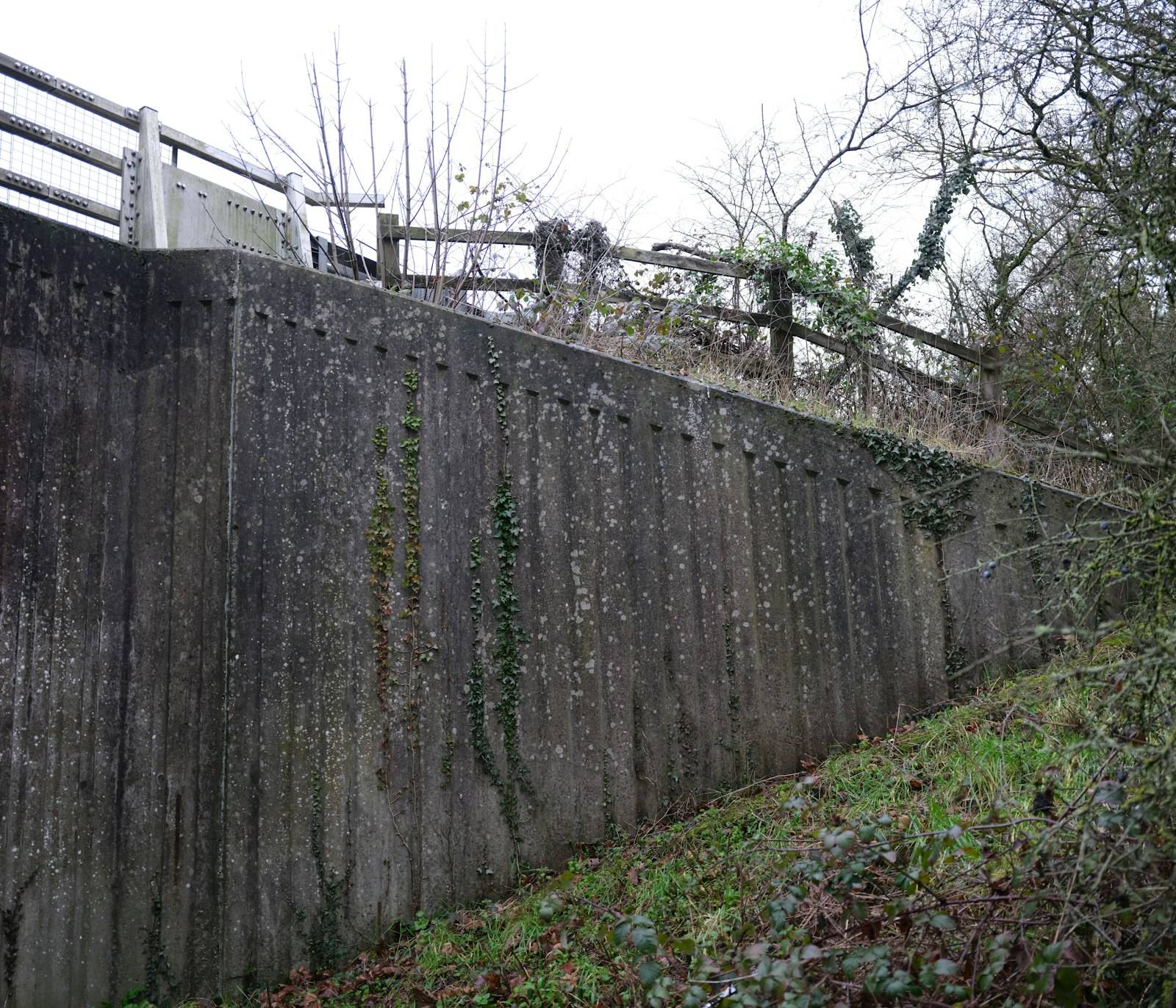
A retaining wall that has started leaning outward may be moving under pressure from soil, water or other loads, or it may have a foundation or construction problem. A new or increasing lean deserves professional assessment. A photograph or measured angle alone cannot establish whether a retaining wall is safe or repairable.
A wall designed with a backward setback can look sloped even when it hasn’t moved. What matters is whether it is changing from its intended alignment and whether there are other signs of distress.
If the wall is visibly unstable
If the wall is visibly unstable, bulging, breaking apart or close to people, buildings or vehicles, restrict access to the affected area and seek urgent qualified help. Don’t push it upright, remove blocks, dig behind it or park above it while waiting for an assessment.
For all repair approaches, see retaining wall repair. If you’re comparing providers, find retaining wall contractors and check for an actual repair capability.
Is a Leaning Retaining Wall Dangerous?
It can be. Retaining walls hold soil, and movement can indicate that the wall, its foundation or the retained soil is no longer behaving as designed.
But there is no reliable universal number of inches or degrees of lean that means “safe” or “unsafe.” The answer depends on wall type, height, loads above it, soil, water, foundation, and whether movement is continuing.
A leaning wall near a driveway or house needs greater caution than an isolated decorative feature, but neither can be declared safe from a distance.
Warning Signs That Need Prompt Attention
| What You Observe | Why It Matters |
|---|---|
| Lean becoming more pronounced | The wall or soil may still be moving. |
| Bulge or bow in the middle | Localised pressure or deformation may be occurring. |
| Gaps between blocks or widening cracks | Components may be separating or shifting. |
| Soil sinking or cracking behind the wall | Ground or backfill may be moving. |
| Soil washing out or water pooling | Drainage, erosion or undermining may be contributing. |
| Wall carrying a driveway, structure or steep slope | Additional loads can affect both risk and repair options. |
Take photographs from a safe location, noting when changes first appeared. Do not climb, lean on, remove material from or closely inspect an unstable wall.
Why Is My Retaining Wall Leaning?
Several problems can cause similar-looking movement. An assessment may find more than one.
Water Pressure or Poor Water Management
Water collecting behind a wall can increase pressure on the structure. Surface runoff, inadequate drainage, blocked outlets or groundwater can contribute.
However, fixing a drainage outlet does not necessarily restore a wall that has already moved. The wall’s stability must be considered separately. Our drainage guide explains why incidental water, concentrated runoff and groundwater require different solutions.
Foundation or Soil Movement
Settlement, erosion, unsuitable base preparation or weak ground can change how the wall is supported. Movement at the base can make the wall rotate or separate.
Inadequate Reinforcement or Unsuitable Design
Modular block walls, masonry walls and reinforced concrete walls resist soil pressure in different ways. If the design or construction doesn’t suit the soil, loads or height, the wall may deform.
The Concrete Masonry & Hardscapes Association explains that segmental walls may rely on the blocks’ mass alone or a reinforced-soil system, depending on conditions. A wall’s visible facing doesn’t reveal everything that is supporting it.
New Loads Above the Wall
A driveway, parked vehicle, added fill, building work or a new fence can change the loads acting behind or above a wall. Those changes matter even when the wall itself has not been altered.
Material Deterioration
Rotting timber, deteriorated masonry, damaged blocks or corroding structural elements may reduce a wall’s ability to perform. A surface repair might conceal deterioration but not restore buried members.
Can You Fix a Leaning Retaining Wall?
Sometimes. The answer depends on a professional diagnosis, not a generic online straightening technique.
| Possible Outcome | When It Might Be Appropriate |
|---|---|
| Correct external drainage or runoff | The wall is assessed as suitable to remain and a separate water problem is identified. |
| Repair isolated damage | The wall remains stable and the damage is genuinely localised. |
| Partial rebuild | A discrete section can be removed and reconstructed safely while the rest remains suitable. |
| Engineered stabilisation | A qualified designer establishes that retaining or strengthening the wall is feasible. |
| Full removal and replacement | The wall is unsuitable, movement is widespread, or rebuilding is the reliable option. |
An engineer may need to assess the soil and structure before a contractor can responsibly specify structural repairs.
For budgeting, see retaining wall repair cost and retaining wall replacement cost. Do not assume the small national repair-price averages apply to a heavily leaning wall.
What Not to Do to a Leaning Wall
Don’t:
- Push or jack it upright without an engineered plan.
- Excavate soil behind it to release pressure.
- Remove bottom blocks, timber or stones to “see the foundation.”
- Drill new drainage holes as a first response.
- Add another wall directly in front without designing the combined system.
- Treat crack filler, mortar or landscaping as proof of structural repair.
- Assume a wall under four feet high cannot be dangerous.
These interventions can disturb the support the wall still has or conceal evidence of movement.
If an excavation is planned after assessment, the responsible party should follow local utility-location requirements, including 811 in the United States.
What Happens During an Assessment?
A suitable professional may evaluate the wall’s alignment, height, geometry and material; soil and drainage conditions; surface runoff; available construction drawings; ground movement; foundation; and loads from nearby structures or vehicles.
Where needed, they may recommend further investigation, engineering or a geotechnical assessment.
The homeowner should receive an explanation of what is known, what remains uncertain, the proposed work and why the repair is expected to address the cause.
Who Should You Call?
Choose a contractor who explicitly offers retaining wall repair, not merely landscaping or installation. When movement is serious, the wall supports important loads or stability is uncertain, seek an appropriately qualified structural or geotechnical engineer.
Ask prospective contractors:
- Have you assessed leaning walls built from this material?
- Who establishes whether excavation is safe?
- What information do you need before proposing a repair?
- How will you distinguish drainage problems from foundation or reinforcement problems?
- When would you recommend an engineer?
- What would make replacement preferable to stabilisation?
- Can you provide a written scope, exclusions and explanation of expected performance?
Browse retaining wall contractors and use our hiring checklist.
Leaning Retaining Wall FAQs
Can a leaning retaining wall collapse?
Yes. Some walls remain visibly displaced for years, but appearance alone cannot tell you what will happen next. New or progressive movement warrants prompt assessment and restricted access where instability is suspected.
Is a backwards-leaning wall normal?
Some wall systems intentionally step backward toward the retained soil. Compare the current alignment with the original design if available; do not confuse designed setback with movement.
Will adding a French drain straighten the wall?
No. A drain may manage a water source, but it does not automatically move the wall back or restore damaged structural components. The proposed fix must address stability as well as water.
Does insurance cover a leaning retaining wall?
Coverage depends on your specific policy and the cause of damage. Ask your insurer for a written decision; exclusions may apply to earth movement, flooding, deterioration and maintenance.
Can I fix just the leaning section?
Possibly, if a professional establishes that the remaining wall can safely remain and that repair boundaries are appropriate. Partial reconstruction is not always possible or economical.
Get the Cause Assessed Before Choosing a Fix
The useful next step isn’t to guess how many inches of movement are acceptable. It’s to understand the wall’s actual stability and the reason it moved.
Find contractors who advertise repair work, and review our repair guide before comparing proposed methods.
This is general information, not a remote structural assessment. RetainingWallGuide is an independent directory and editorial resource, not an engineering or construction company.
Sources and Method
- CMHA — Guide to Segmental Retaining Walls
- CMHA — Segmental Retaining Wall Design
- City of Portland — Retaining Wall Requirements
- HomeGuide — Retaining Wall Repair Cost
Technical references checked October 14, 2026. The content intentionally gives no universal lean or crack-width safety threshold.
Review status: the technical sections of this guide have not yet been reviewed by a qualified professional. We’ll name the reviewer and their qualifications here once that review is complete. See our editorial policy.